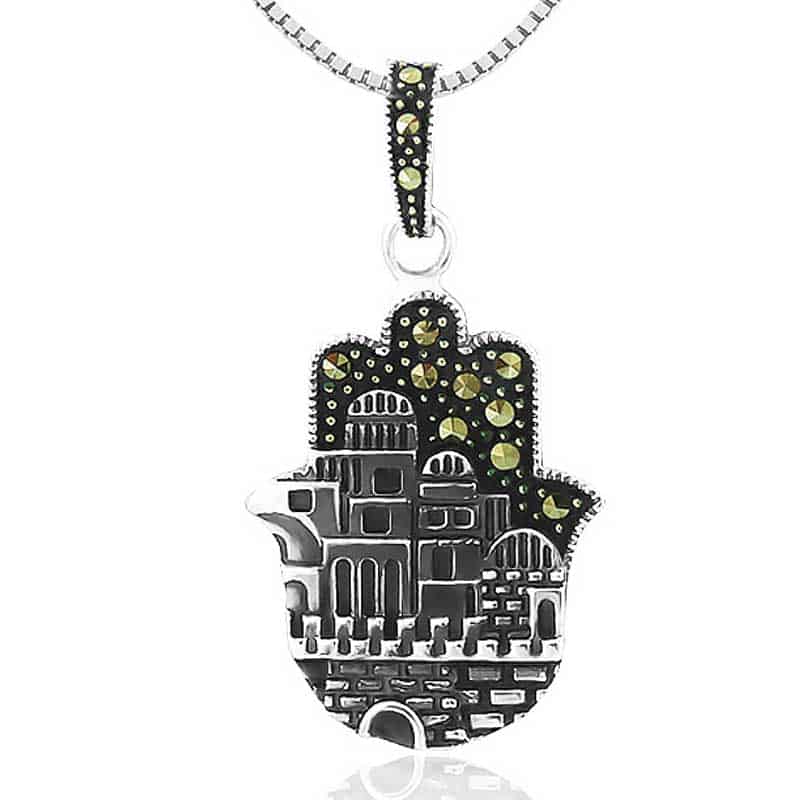
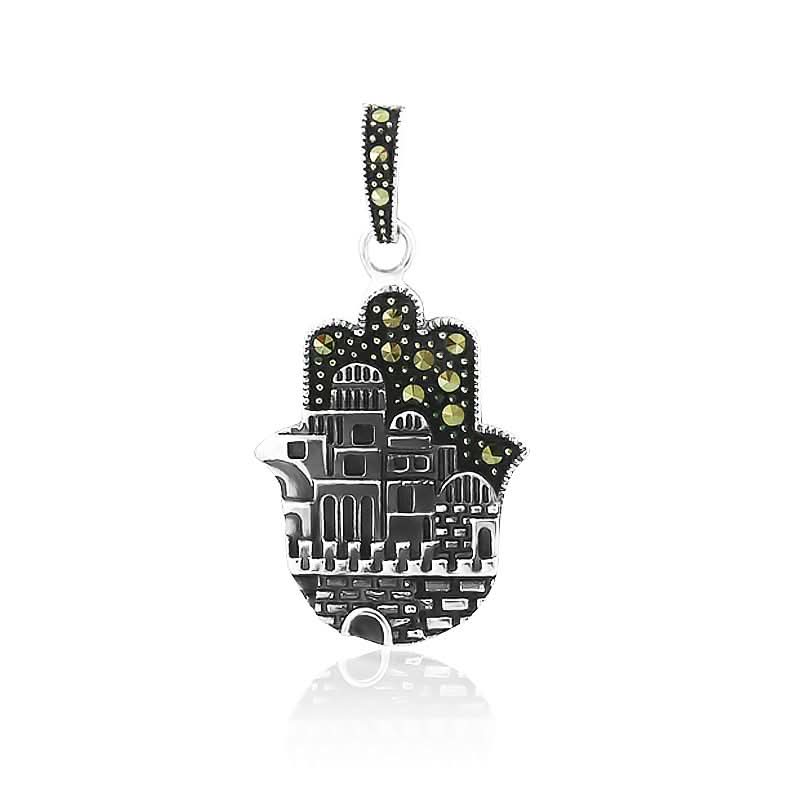
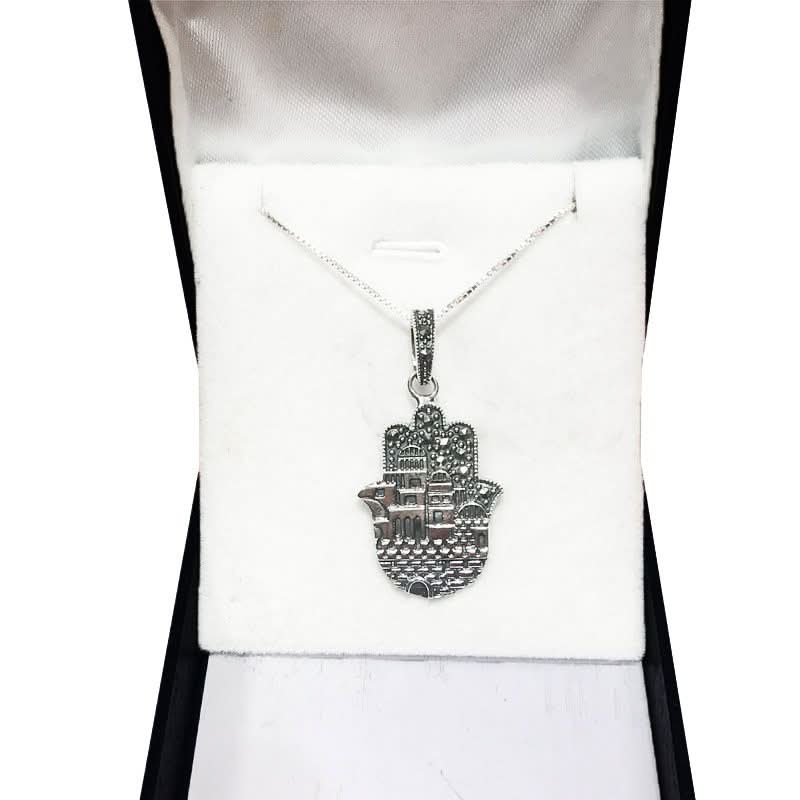
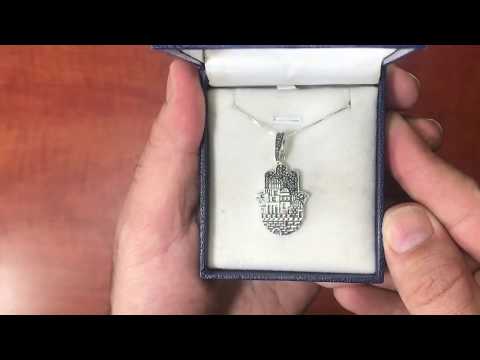
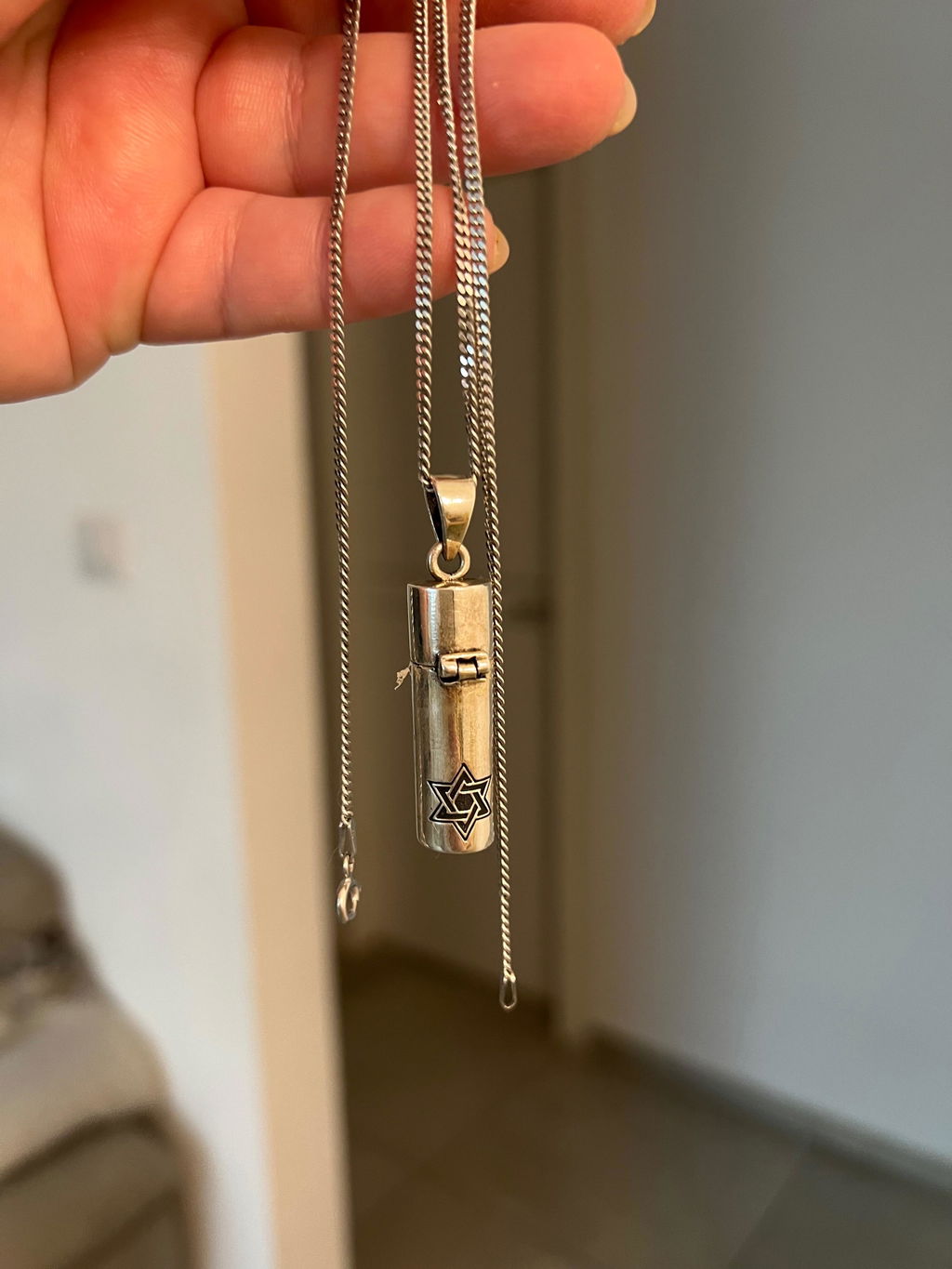
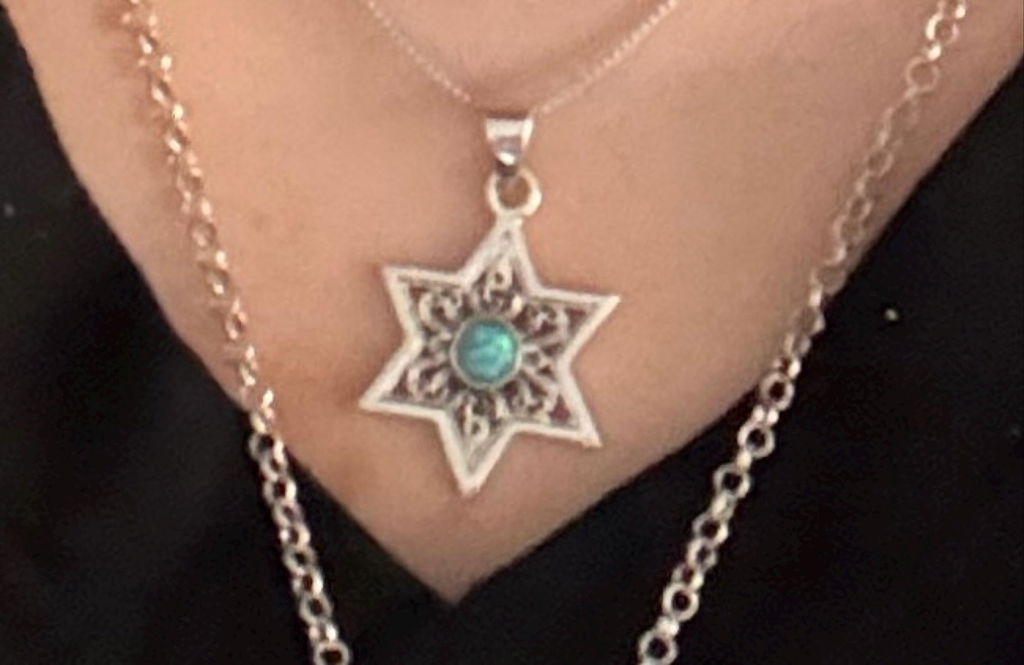
High-quality Hamsa pendant necklace on a background of the walls of Jerusalem.
The pendant is made of very high quality 925 sterling silver!
Adorned with black "Marquise" stones on the link as well.
A perfect gift for any man/woman
Developed and manufactured by our company. This allows us to guarantee the best quality
and maintain an attractive price.
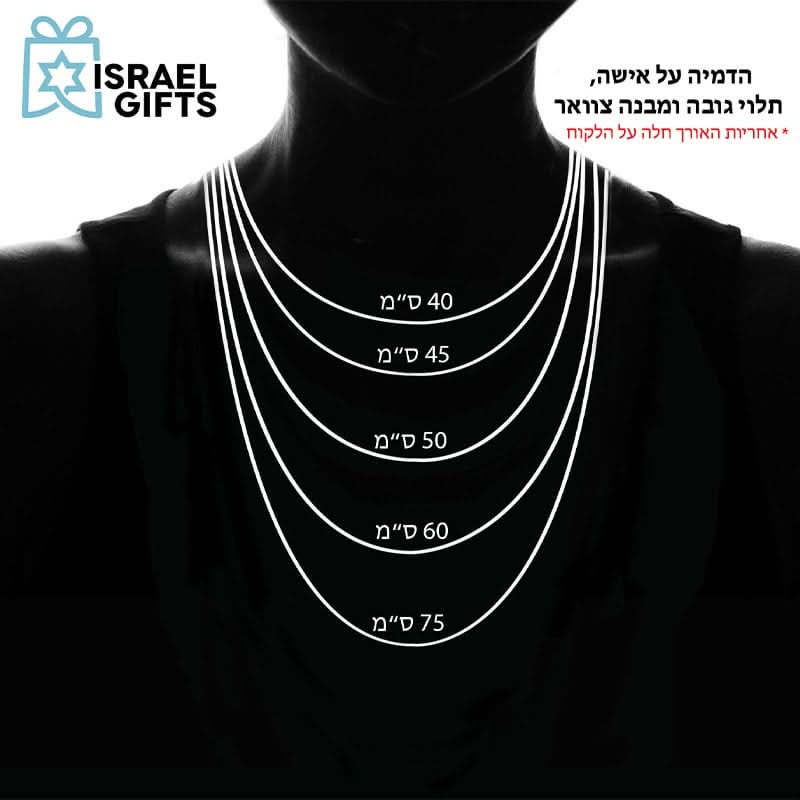
The pendant comes with a 925 silver box chain, 45 cm long.
Pendant size: 2.9 * 2.1 cm. A large and very impressive pendant.
A perfect gift for: Birthday, IDF recruitment, IDF release,
Gift for commander (male/female), for husband/wife, for boyfriend/girlfriend, etc.!
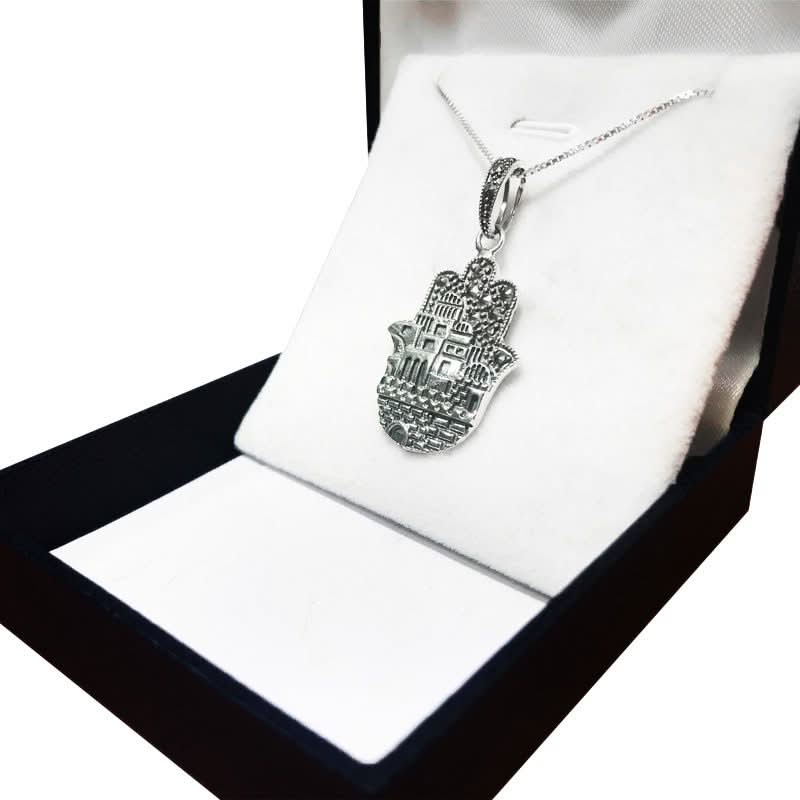
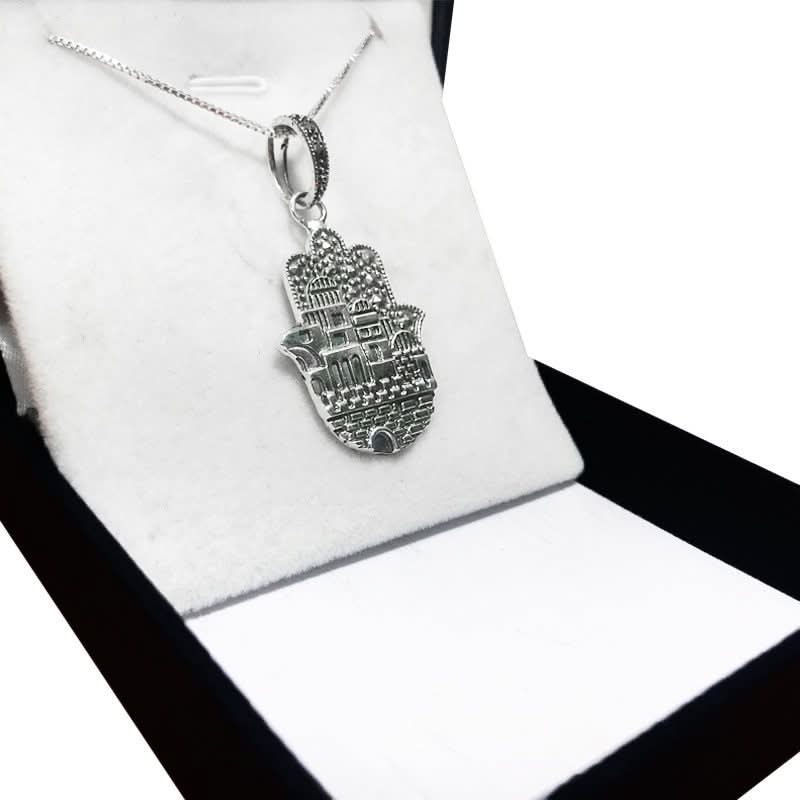
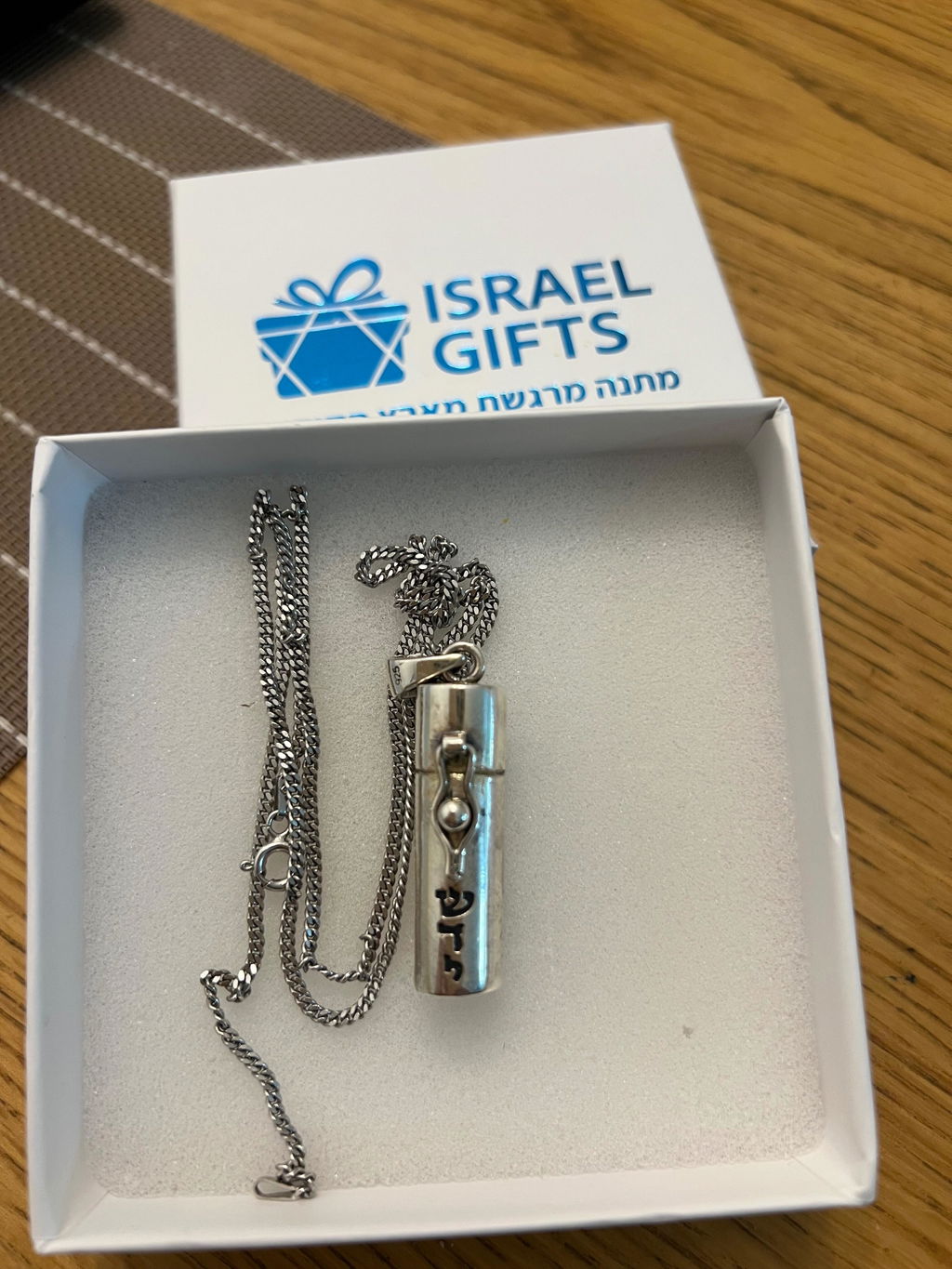
Comes with a gift box!
A little about 925 silver jewelry:
925 silver jewelry is a popular choice among both men and women due to its high quality, affordability, and versatility.
Sterling silver is composed of 92.5% pure silver and 7.5% other metals like copper, zinc, or nickel, which enhances its strength and durability.
This combination of metals ensures that the jewelry is long-lasting and resistant to tarnishing and corrosion.
925 silver jewelry comes in a wide range of styles and designs, making it easy to find the perfect piece to suit any occasion.
From simple and elegant stud earrings to intricate and bold necklaces, there is something for everyone when it comes to 925 silver jewelry.
It is also a popular choice for wedding bands and engagement rings, due to its cost-effectiveness and timeless appeal.
One of the key advantages of 925 silver jewelry is its hypoallergenic properties. Unlike other metals such as nickel or brass,
sterling silver is non-reactive and safe for individuals with sensitive skin or allergies.
This makes it a popular choice for those who have had adverse reactions to other types of jewelry.
Another advantage of 925 silver jewelry is its affordability. While silver is a precious metal, it is significantly less expensive than other options such as gold or platinum,
making it accessible to a wider range of people. This affordability also makes it an ideal option for gift-giving,
as it is a high-quality and thoughtful present that won't break the bank.
When it comes to caring for 925 silver jewelry, there are a few important tips to keep in mind. It is important to store the jewelry in a cool, dry place when not in use,
and to avoid exposure to harsh chemicals such as perfumes or hair products. To clean 925 silver jewelry, you can use a soft cloth
and a mild silver cleaner to remove any dirt or tarnish that may have accumulated over time.
In conclusion, 925 silver jewelry is a popular and versatile option for those seeking high-quality, affordable, and hypoallergenic jewelry.
Its wide range of styles and designs makes it easy to find the perfect piece for any occasion, while its durability and timeless appeal ensure
that it will be a long-lasting addition to any jewelry collection. With proper care and maintenance, 925 silver jewelry can be enjoyed and cherished for years to come.
A little about "Hamsa":
The Hamsa, also known as the Hand of Fatima or Hand of Miriam, is a symbol revered in many cultures and religions worldwide. It is a hand-shaped amulet that
is believed to bring good luck, protection, and happiness to its owner. The word "Hamsa" in Arabic means "five," and the symbol is often
depicted with five fingers, although it can also be represented with three or four fingers.
The Hamsa has a long history and is said to date back to ancient times. It is believed to have originated in ancient Mesopotamia, where it was
used as a symbol of protection against the evil eye. The symbol spread to other parts of the world, including the Middle East, North Africa, and Europe, where it was adopted by various cultures and religions.
In Islamic tradition, the Hamsa is known as the "Hand of Fatima," named after the daughter of the Prophet Muhammad. According to legend, Fatima was visited by an angel who gave
her a hand-shaped amulet to protect her from harm. The Hamsa is therefore considered a symbol of Fatima's faith and devotion to God, and it is often worn as a sign of protection and blessings.
In Jewish tradition, the Hamsa is known as the "Hand of Miriam," named after the sister of Moses. Miriam was a prophetess and leader of the Jewish people, and it is said
that the Hamsa represents her strength, courage, and compassion. The Hamsa is often used in Jewish homes as a symbol
of protection and is believed to ward off evil spirits and bring good luck to the occupants.
In both Islamic and Jewish tradition, the Hamsa is also associated with the number five, which is considered a sacred number. In Islam,
the five fingers of the Hamsa represent the five pillars of Islam, while in Judaism they represent the five books of the Torah.
The Hamsa is therefore seen as a symbol of faith and devotion to God.
The Hamsa is also used in other cultures and religions, including Christianity and paganism. In Christianity it is sometimes called the "Hand of Mary",
after the mother of Jesus, and is used as a symbol of protection and blessings. In pagan cultures, the Hamsa is often associated with the goddess Venus and is used as a symbol of fertility and abundance.
Today, the Hamsa is a popular amulet and is sometimes worn as jewelry or hung on a wall. It is believed to bring good luck,
protection, and happiness to the owner, and it is a powerful symbol of faith and devotion to God. The Hamsa is a testament to the enduring power of symbols and their ability to connect us to our past, present, and future.