Gifts for Rosh Hashanah

The Jewish New Year – History, Meaning, Customs, and Gifts with True Value
The Jewish New Year is not just "the start of a new year"; it is one of the deepest and most significant moments in the Hebrew calendar. It is a time when the entire Jewish people pause for a moment, look inward, recalculate their path, and seek to turn a new page. In many ways, Rosh Hashanah is a holiday of consciousness: on the one hand, festive and family-oriented, and on the other, serious and profound, with themes of judgment, remembrance, and repentance. It opens the Ten Days of Repentance and leads to Yom Kippur, and is therefore perceived as a spiritual starting point for an entire year – not just in numbers and dates, but in intentions, habits, and choices.
Even in the Torah, the first day of the month of Tishrei is mentioned as a special day of "a remembrance of blowing the shofar." In later generations, the Sages designated this holiday as the Day of Judgment – a day when a person reflects on the past year and on the person they wish to be in the coming year. This idea of a new beginning, based on introspection and rectification, is what gives Rosh Hashanah its power: it is a holiday that reminds us that time does not merely pass – it can also change, and we can change along with it.
The Historical Roots of Rosh Hashanah: Cyclicality, Kingship, and Remembrance
In ancient times, life in the Land of Israel was deeply connected to the cycles of nature and agriculture. Rosh Hashanah also marked significant transitional periods, connecting the end of one cycle with a new beginning, and holding hope for a year of rain and abundance. With the consolidation of halachic and communal tradition after the period of the Second Temple, the spiritual content took on a more central role: the coronation of God ("Malchuyot"), remembrance ("Zichronot"), and the sound of the Shofar ("Shofarot") – three themes that accompany the holiday prayers and focus the heart.
What is interesting about Rosh Hashanah is that it manages to be both national and personal. On the one hand, it is a significant day for all of Israel; on the other hand, it is a day when every individual asks themselves personal questions: What new things happened to me this year? What went wrong? What would I like to change? And how can I bring more good – to myself, to my family, to my surroundings?
The Shofar: A Sound That Brings Us Back to Ourselves
One of the strongest symbols of Rosh Hashanah is the shofar. It is not a decorative symbol – it is a sound. A simple, primal, penetrating sound. The shofar does not "play" to embellish the ceremony; it comes to awaken, to remind, to slightly shake up the routine and bring seriousness and a sense of renewal. Some people describe the blowing of the shofar as something that speaks directly to the heart – without words, without explanations, just a sound that invites a person to awaken.
It is no coincidence that many choose to incorporate the world of shofars into holiday gifts, especially when it is a kosher, high-quality, and respectable item. If you want to delve deeper into the meaning, types, sizes, and intricacies of kashrut and production – there is an excellent and detailed article on the website: An original holiday gift? A shofar! What types are there? Prices? Sizes? How is a shofar made? What invalidates a shofar?. The magic is that this is a gift that feels "real" – not a passing trend, but something that endures.

The Rosh Hashanah Table: Sweetness, Blessing, and Symbols That Speak the Language of Home
Despite its spiritual depth, Rosh Hashanah is also a warm, homey holiday, full of scents and flavors. The Rosh Hashanah table is almost a "story" in itself: apple in honey as a symbol of a sweet year, pomegranate as a symbol of abundance, and prayers and blessings recited around foods that symbolize hope. But beyond what is eaten, there is also significance to what is served on it – the dishes, the presentation, the aesthetics that honor the moment.
This is where items come into play that enhance the experience without making it too commercial: dedicated honey dishes, ornate holiday plates, a kiddush cup that honors the ceremony. For example, someone looking for a gift that is both practical and elegant might connect with something like a "Boreh Pri Hagafen" Kiddush Cup made of crystal, 16 cm – this is an item that accompanies the family for years, on Sabbaths and holidays, and it doesn't remain just a "Rosh Hashanah gift."

Rosh Hashanah Gifts: Not a Halachic Obligation, but a Language of Connection and Meaning
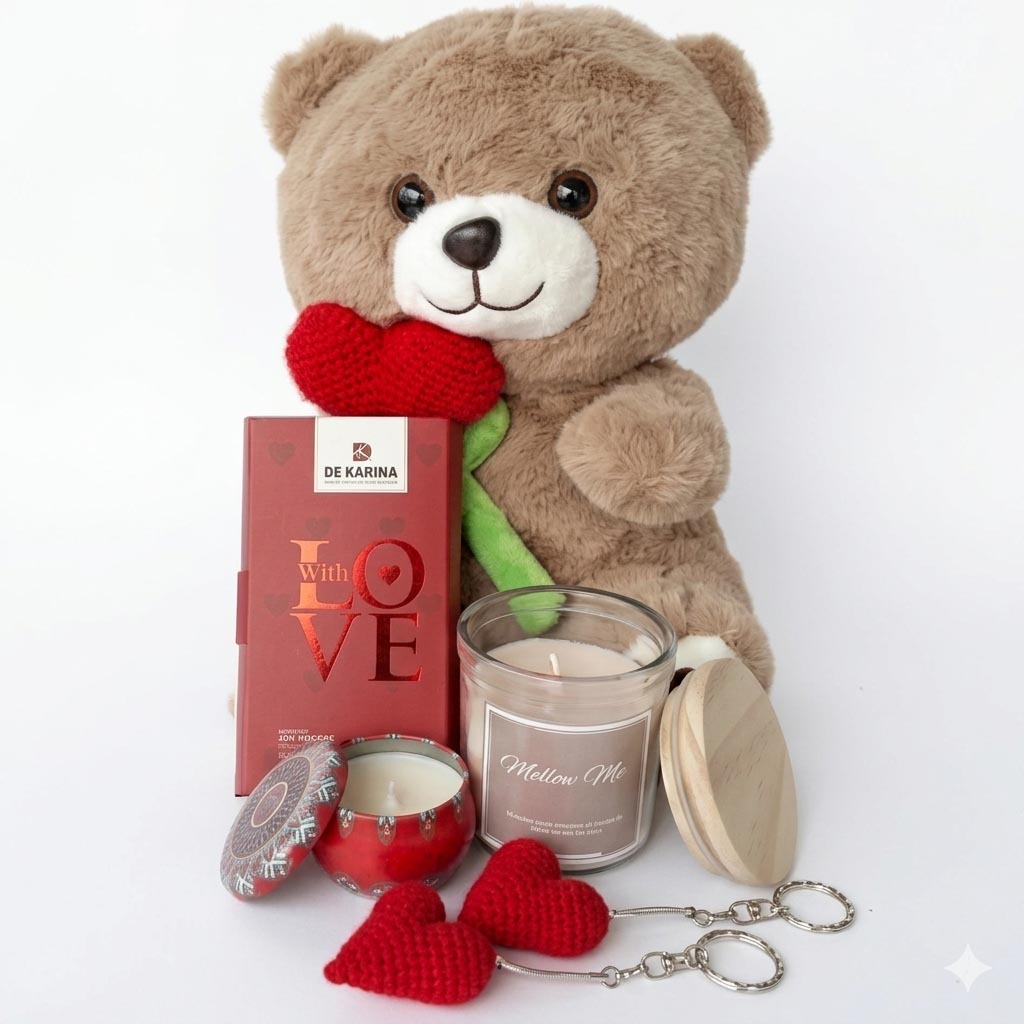
Giving gifts on Rosh Hashanah is not a binding commandment, but it has become over the years a natural gesture between family members, friends, hosts, and guests. It is a holiday full of gatherings: holiday meals, visits, hosting, and a feeling of "let's start well." A small gift – especially one that connects to the holiday's symbols – can make the gathering more moving.
The beauty is that Rosh Hashanah gifts can be both traditional and modern. The world of Judaica and gifts has evolved greatly, and today there are combinations of materials, finishes, and styles that suit a contemporary Israeli home.
Honey – Not Just a Symbol, but a Small Ritual of Sweetness
Apple in honey is a moment familiar to almost every Jewish home: the blessing, the dipping in honey, the wish for a good and sweet year. Therefore, gifts revolving around "honey" are a classic that never gets old – when done right. An ornate honey dish, especially one that connects to the shape of an apple, can be a gift that feels precise for the holiday and not generic. For example: an aluminum honey dish, 12.9 cm, in the shape of an apple – a relatively small item, but with presence, especially when it is on the table on the holiday eve.

"Shana Tova" Plate – An Item That Honors the Table and Tells a Story
There is something very Israeli-Jewish about holiday plates: they are not "just dishes"; they become an element that creates an atmosphere. An ornate holiday plate for Rosh Hashanah can be a perfect gift for hosts, or a way to refresh the holiday table at home. For example, a magnificent 40 cm "Shana Tova" plate for Rosh Hashanah can sit in the center of the table and make the entire presentation more festive and respectful.
Gifts with Continuity: Wine, Havdalah, and Other Holidays
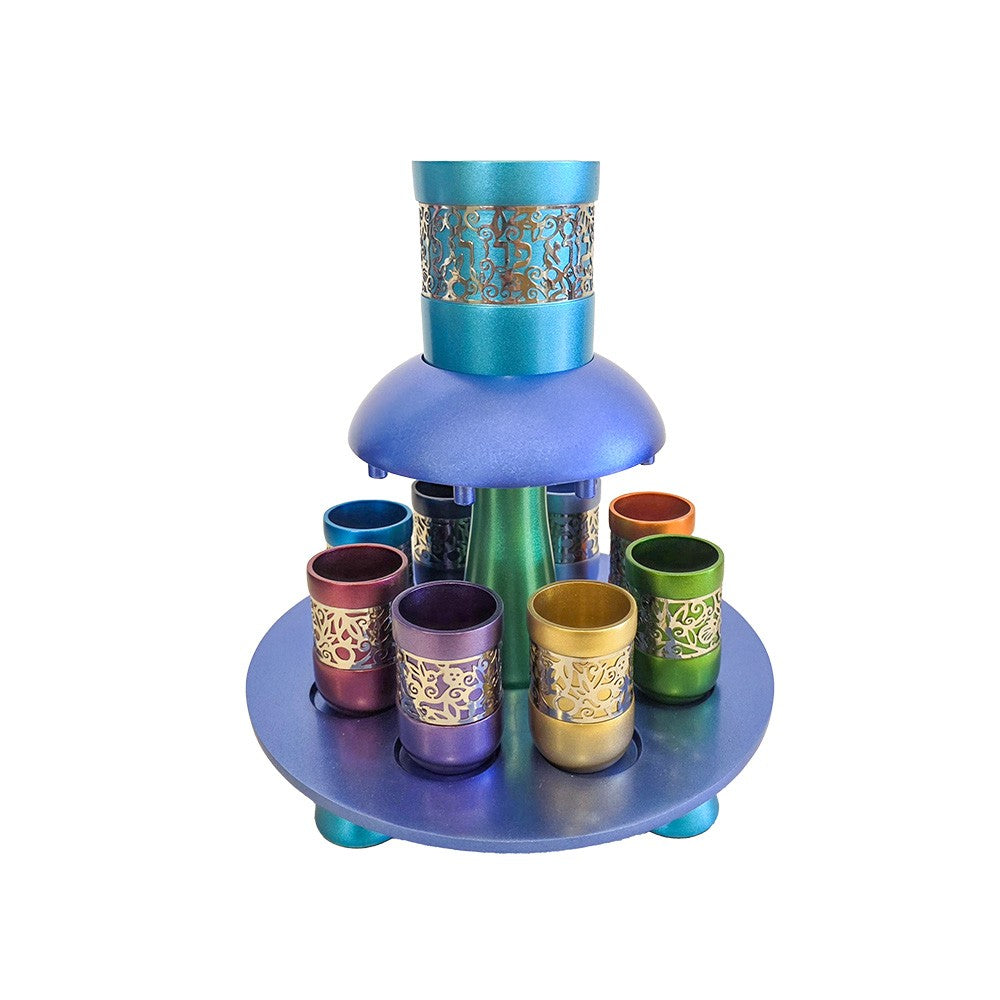
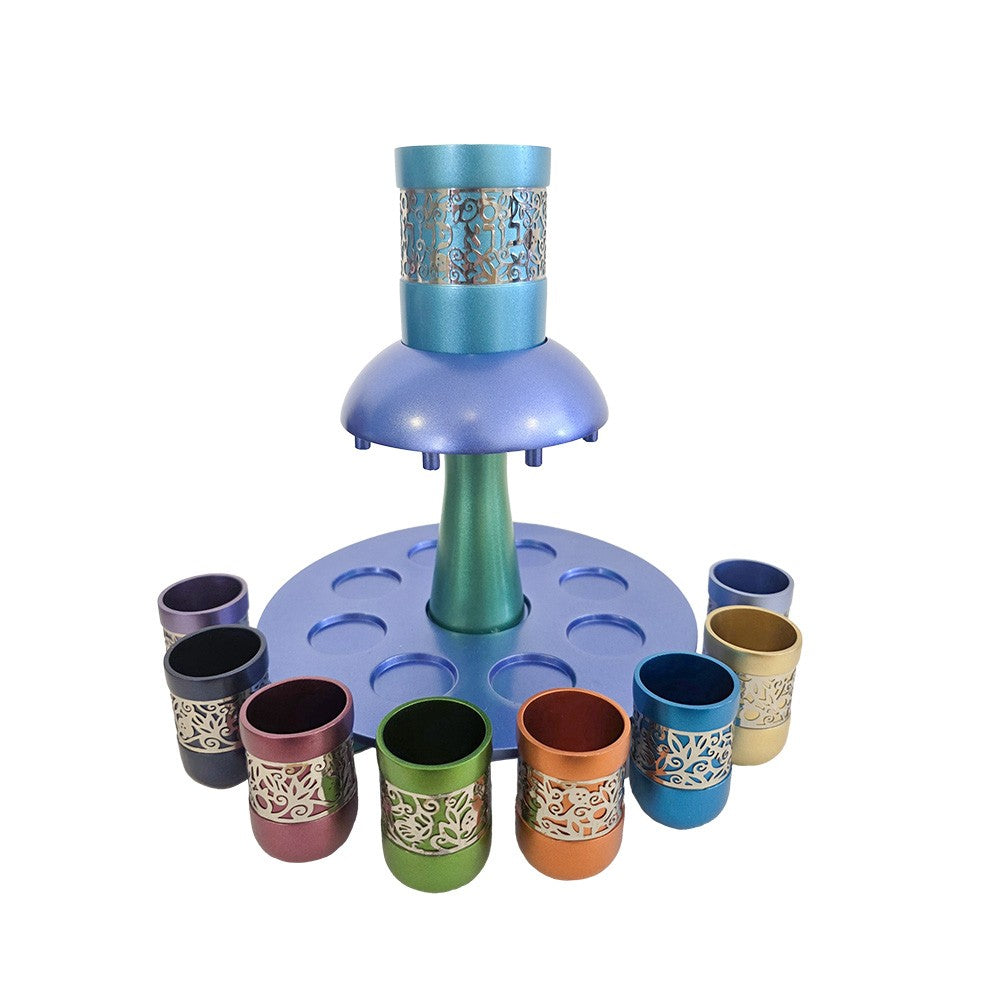
One of the strong points of Judaica gifts is that they don't end with the holiday eve. A Kiddush cup, a Havdalah set, or wine accessories continue to be used throughout the year – on Sabbaths, holidays, and even during "regular" family gatherings. Those who appreciate this world can find much inspiration and solutions in the world of wine accessories, wine parts, and Havdalah sets – and this transforms a gift from a "moment" to a "beautiful habit."
And in the same breath, those who buy gifts for the Tishrei holidays sometimes find themselves returning to the same language of tradition later in the year – for example, leading up to Passover. If you want to leave a natural opening for transitioning to another holiday on the site, this integrates perfectly through a category like Passover gifts – because ultimately, the principle is similar: a holiday table, family, hospitality, and items that honor the occasion.
Rosh Hashanah: To Start Differently, To Start Well

Rosh Hashanah reminds us of something simple yet not obvious: it is possible to start anew. It is possible to decide that this year will be a little better, a little more precise, a little more connected. The connection to tradition does not have to be "heavy" or distant; it can be pleasant, homey, and tangible – through prayer, through custom, through a holiday table that honors the family, and through a small, meaningful gift that strengthens connections between people.
Ultimately, what remains after the holiday is not just what we ate or whom we hosted – but the feeling. The feeling that we began the year with good spirits, with intention, and with a little more heart.