

Wall Hamsa – Meaning, Where to Hang, and How to Choose the Perfect Gift for a Home
A hamsa for the wall is much more than a decorative item. It is a profound symbol of protection, blessing, and positive energy — one that has been part of Israeli and Middle Eastern culture for thousands of years. In recent years, wall-mounted hamsas have become one of the most sought-after items for Israeli homes, as well as a beloved gift for housewarmings, birthdays, Passover, and other joyful occasions.
If you’re looking for wall-mounted hamsas — combining original Israeli art with spiritual meaning — this guide will help you make the right choice.
 |
What is a hamsa, and what does it mean?
The word “hamsa” comes from Arabic and means “five,” referring to the five fingers represented by the hand. In Jewish culture, the hamsa is also known as the “Hand of Miriam,” after Miriam the prophetess, the sister of Moses and Aaron, who symbolized protection, blessing, and salvation.
The hamsa serves as an amulet against the evil eye — one of the most widespread beliefs in the cultures of the Middle East and North Africa, and among the Jewish people throughout the generations. The symbol appears in Judaica jewelry, home décor, and Israeli art, and has become one of the symbols most closely associated with Israel and its cultural identity.
Hamsa designs come in a wide variety of styles: from traditional hamsas with a blue eye in the center, to modern designs featuring flowers, birds, and lettering — and even luxurious silver hamsas set with natural stones. Each one carries the same energy of protection and blessing.
Want to see what a wall hamsa from Israel looks like up close? Watch the video:
Wall hamsas — why are they so popular?
In recent years, demand for wall-mounted hamsas has grown significantly — both in Israel and among Jews and Israel enthusiasts around the world. There are many reasons for this:
- Meaningful home décor — a wall hamsa is not only beautiful; it brings protective and blessing energy into the home
- A gift with a message — whether for a housewarming, holiday, or joyful occasion, a wall hamsa is a personal and heartfelt choice
- Design variety — hamsas are available in every style, size, and material, making it easy to find one to suit any home
- A connection to one’s roots — for many, a hamsa on the wall symbolizes Jewish, Israeli, and cultural identity
 Types of wall hamsas — what’s the difference?
When you’re looking for a hamsa to hang, you’ll discover several different types — each with its own character, material, and meaning:
Ceramic and faux-stone hamsas
Among the most popular types for hanging on the wall. The 19 cm faux-stone hamsa with blessings is a great example — an item that combines a rich texture with a variety of distinctive decorative motifs, and suits any home style. Its natural texture lends it a sense of warmth and authenticity.
Hamsas with crystal inlays
Crystal hamsas add sparkle and elegance to your wall. Wall pendant — crystal-inlaid hamsa brings a touch of elegance to any corner of the home. The crystals scatter the light in a special way, creating a feeling of celebration and delicacy at once.
Metal hamsas with a home blessing
Metal hamsas are durable, elegant, and well suited to modern, minimalist home styles. 14.5 cm metal wall hamsa pendant with a home blessing is the perfect housewarming gift — combining impressive design with a heartfelt blessing for the home and its residents.
Watch an unboxing of a wall hamsa from Israel — see what an authentic hamsa looks like up close:
 Where to hang a hamsa at home: the traditional placement
A question people often ask is: where exactly should you hang a hamsa at home? According to Jewish tradition and common Judaica custom, there are several recommendations:
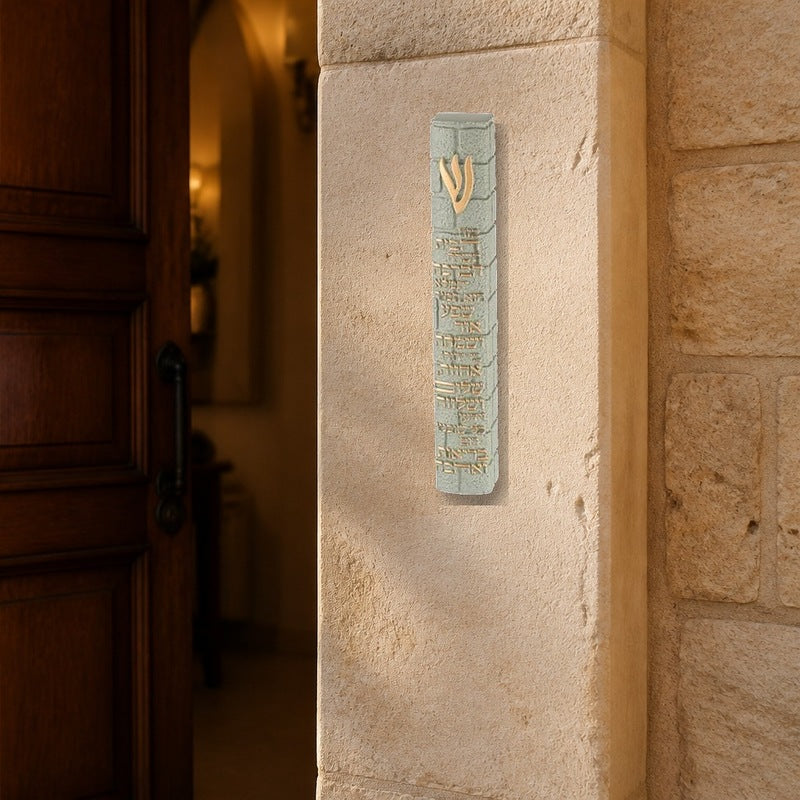
- By the front door — the most traditional spot. The hamsa “blesses” those who enter and “protects” the home. You can hang it to the right of the door, at eye level
- In the living room — on a prominent central wall, usually above the sofa or opposite the entrance, so it’s the first thing people see
- In the kitchen — another traditional spot, since the kitchen is the “heart of the home,” a place for blessing the food and gathering as a family
- In the bedroom — for a sense of protection and peace during the night
- In the children’s room — many parents choose to hang a hamsa in their children’s room as a symbol of protection
Important tip: According to some traditions, the fingers should point downward to pour out blessings; according to others, they should point upward to symbolize raising hands for protection. Both directions are common and accepted.
 |
A wall hamsa as a gift — what occasions is it suited for?
One reason a wall hamsa is such a popular gift is that it suits almost any occasion:
Housewarming
It’s the classic housewarming gift. When someone moves into a new apartment, Judaica and home gifts featuring a hamsa to hang on the wall are the perfect blessing for a new home, a new life, and a fresh start.
Rosh Hashanah
At the start of a new year, Rosh Hashanah gifts featuring the hamsa symbol carry a blessing for a good and protected year. A wall hamsa is a gift that stays in the home for years, reminding you of the blessing every day.
Family and personal celebrations
A milestone birthday, bar mitzvah, wedding — whenever you want to give a meaningful gift, a wall hamsa is a heartfelt choice.
A gift for friends abroad
For tourists, Jewish friends, and Israel enthusiasts living abroad, a wall hamsa from Israel is a unique gift that connects them to their roots and the land. Authentic Israeli gifts that come directly from Israel hold tremendous emotional value.
Another wall hamsa from our collection — unboxed:
How to choose a wall hamsa — a practical guide
Having trouble choosing among all the options? Here are a few questions to help you decide:
What’s your home’s style?
- Traditional / Middle Eastern home — a hamsa with rich ornamentation, warm colors, natural stones, or ceramic
- Modern / minimalist home — a metal hamsa in silver or gold with a clean design
- Bohemian / colorful home — a hamsa with crystal inlays and delicate design details
What size is right?
For a large living room wall, choose a medium to large hamsa (15–25 cm). For an entryway or small room, a smaller hamsa (10–15 cm) will look lovely without “overwhelming” the space.
Is there a message you’d like to convey?
Many hamsas include inscriptions such as “Home Blessing,” “Good Fortune,” or “Peace.” Choose a hamsa with a message that matches the purpose of your gift or the values of its recipient’s home.
 |
Wall hamsa vs. hamsa jewelry — what’s the difference?
A wall hamsa and hamsa jewelry share the same meaning but serve different purposes:
- Wall hamsa — protects the home and brings blessings into the space. It is always there for everyone who enters the home
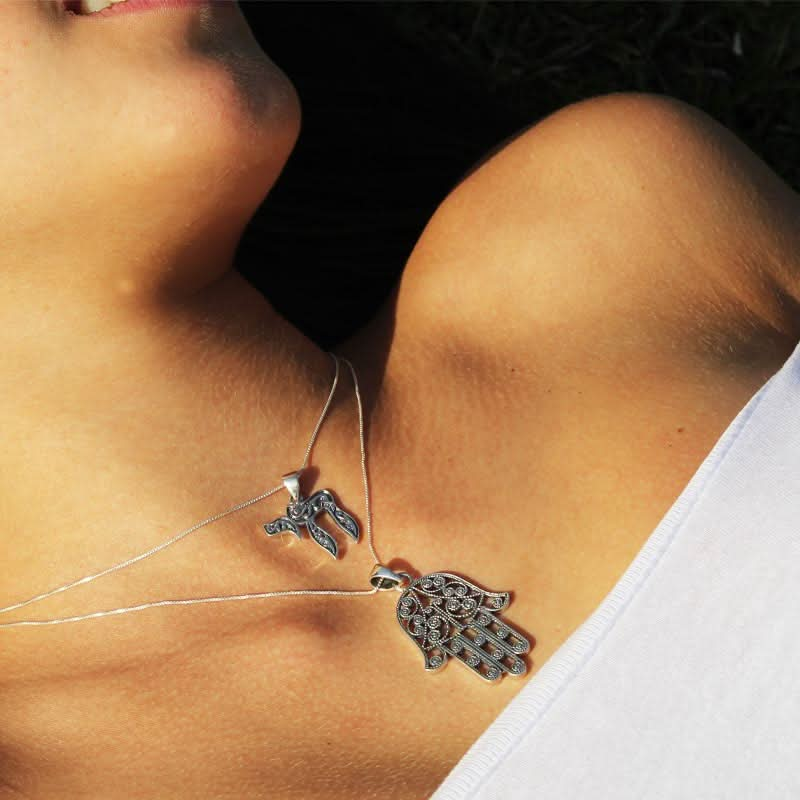
- Hamsa jewelry — protects the person who wears it. A 925 sterling silver hamsa pendant or a 14-karat gold hamsa pendant is a personal item that accompanies the wearer wherever they go
Many people choose to combine both — a wall hamsa at home and a hamsa worn as jewelry — to embrace the symbol of protection and blessing in every aspect of life. At Israel Gifts you’ll find both — a wide selection of wall hamsas and hamsa jewelry, all connected to original Israeli art.
Original Israeli art in your home
One of the special things about our hamsas is that each one is made in Israel by Israeli artists and creators who pour creativity, tradition, and meaning into every piece.
When you hang a hamsa from Israel on the wall in your home, you’re bringing in more than a beautiful item — you’re bringing a piece of Israel, its traditions, and the energy of the Holy Land into your home.
Every hamsa in our collection has been carefully selected — from small, delicate pieces to striking works of art that become the focal point of any room. They’re all authentic, all from Israel, and all carry a blessing.
Want to learn where the hamsa symbol came from, what the fingers and eye mean, and how it became jewelry? Read the complete guide to the hamsa — history, meaning, and significance.
 In summary — a wall hamsa from Israel
A wall hamsa is much more than a decorative item — it is a symbol, a blessing, and a connection to one’s roots. Whether you’re looking for the perfect housewarming gift, a Rosh Hashanah gift, a gift for a joyful occasion, or simply want to bring positive energy into your home, a wall hamsa from Israel is the right choice.
Browse our collection of wall hamsas and choose the piece that speaks to your heart — and to the heart of the person you’re giving it to.

Leave a comment
This site is protected by hCaptcha and the hCaptcha Privacy Policy and Terms of Service apply.