

Passover Gifts – Background, Meaning of the Holiday, and Common Trends for the Holiday
Passover Gifts – Background, the Meaning of the Holiday, and Popular Trends

Passover is one of the most important and moving holidays on the Jewish calendar. It commemorates one of the defining events in the history of the Jewish people—the Exodus from Egypt. But Passover is much more than a historical story: it is a holiday of family, remembrance, tradition, and Passover gifts that add warmth and love to the holiday table. In this article, we’ll learn about the holiday’s history and the meaning of each of the Seder plate’s symbols, and share wonderful gift ideas to make the Seder night unforgettable.
What Is Passover? Historical Background and Meaning
Passover, also known as the “Festival of Matzot,” the “Spring Festival,” and the “Festival of Freedom,” is the first of the three pilgrimage festivals in Judaism. It is celebrated for seven days, from the 15th of Nisan through the 21st of Nisan. The first and last days are called “holy days,” and the days in between are known as “Chol HaMoed.”
Passover commemorates the Israelites’ liberation from slavery in Egypt. After God brought ten plagues upon Pharaoh and the Egyptians, culminating in the plague of the firstborn, the Israelites hurriedly left Egypt on the 15th of Nisan. Because they left in such haste, their dough did not have time to rise, which is why we still eat matzah today. The final day of the holiday, “the Seventh Day of Passover,” commemorates the miracle of the splitting of the Red Sea.
The Exodus from Egypt is considered the foundation of the Jewish people’s faith because, unlike other events in history, the entire nation witnessed these events firsthand. That is why the story of the Exodus is passed down from generation to generation, primarily through the Seder night.

Seder Night – The Heart of Passover
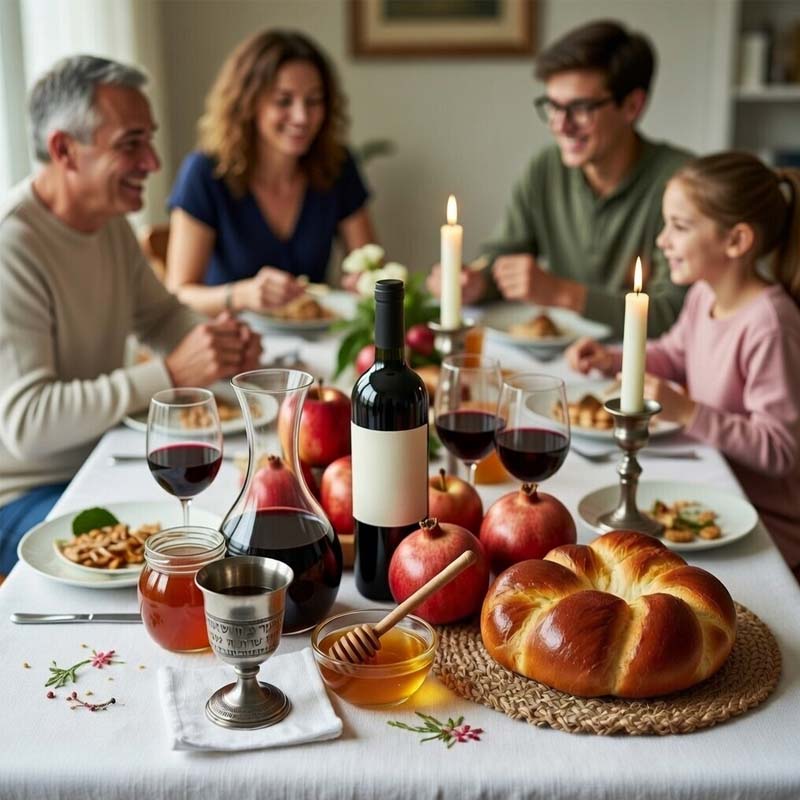
Passover begins with a night known as “Seder night.” This is when the whole family gathers around the table to observe the holiday’s commandments: eating matzah and maror, drinking four cups of wine, reclining, and retelling the story of the Exodus from Egypt according to the Passover Haggadah.
It is a mitzvah to tell the children the story of the Exodus on Seder night—and if there are no children, the adults tell it to one another—in fulfillment of the commandment, “You shall tell your child.” The Passover Haggadah is a collection of rabbinic interpretations and sayings that guides the Seder from the Kiddush blessing through the holiday songs sung late into the night.
Many Seder night customs are designed to keep the children alert and pique their curiosity, so that they ask, “Why is this night different from all other nights?” The story of the Exodus begins with this question.
The Seder Plate – The Six Symbols and Their Meaning
At the center of the Seder table sits the Seder plate—a special, beautifully crafted platter holding six symbolic foods, each representing a different part of the Exodus story. Choosing a beautiful, distinctive Seder plate is one of the most popular and meaningful Passover gifts to give.

Maror – A Reminder of the Bitterness of Slavery
Maror is a bitter vegetable—usually bitter lettuce, horseradish root, or bitter leaves—eaten to remember the bitterness of the Israelites’ enslavement in Egypt. Ashkenazi communities grate horseradish root, while Sephardic and Mizrahi communities generally use lettuce. Maror is dipped in charoset before eating.
Karpas – A Symbol of Freedom and Spring
Karpas is a vegetable—usually celery, parsley, or a cooked potato—served as an appetizer at the start of the meal. It symbolizes our status as free people, who eat vegetables at the beginning of a meal. It is dipped in salt water to remember the tears of the enslaved.
Charoset – A Reminder of the Mortar and Bricks
Charoset is a thick, sweet mixture eaten to remember the mortar used by the Israelites, who were forced to labor brutally building the store cities. Its ingredients vary by community: Ashkenazi charoset is made with apples, nuts, red wine, and spices; Sephardic and Mizrahi versions often include dates, date syrup, and dried fruit. It is eaten together with the maror.
Zeroa – A Reminder of the Passover Sacrifice
The zeroa is usually a roasted chicken wing, and sometimes a roasted lamb or beef bone. It is placed on the plate as a reminder of the Passover sacrifice offered in the Temple. Note that the zeroa is not eaten; it serves only as a reminder.
Egg – A Symbol of Mourning and Rebirth
The hard-boiled egg symbolizes two things: the festival offering brought to the Temple on each of the three pilgrimage festivals, and mourning for the destruction of the First and Second Temples. Some also see the egg as a symbol of hope and rebirth, since new life emerges from an egg.
Chazeret – Additional Bitter Herbs
Modern Seder plates have a separate place for chazeret, which is another kind of bitter herb. In Ashkenazi communities, chazeret is placed in both indentations, and both serve the same purpose: symbolizing the bitter lives of the Israelites in Egypt.

The Holiday’s Main Commandments
The Prohibition of Chametz
One of Passover’s most prominent commandments is the prohibition against eating, benefiting from, or owning chametz throughout the seven days of the holiday. Chametz is any food made from leavened grain dough. The five grains are wheat, barley, oats, spelt, and rye. The reason is that when the Israelites hurriedly left Egypt, their dough did not have time to rise.
Eating Matzah
The Torah commands us to eat matzah on the first night of the holiday—Seder night. Matzah is the bread of poverty, the bread of slaves, but also the bread of freedom, since we ate it as we left for freedom.
Four Cups of Wine
On Seder night, we drink four cups of wine, corresponding to the four expressions of redemption spoken to the Israelites: “I will bring you out,” “I will deliver you,” “I will redeem you,” and “I will take you.” A fifth cup is poured in honor of Elijah the Prophet.
Elijah’s Cup – A Moving Tradition
One of the most beautiful Seder night traditions is Elijah’s cup. After the four cups have been drunk, a fifth cup is poured in honor of Elijah the Prophet, the door is opened, and he is invited to come in. According to tradition, Elijah the Prophet visits every Jewish home on Seder night. 16 cm crystal Kiddush cup is a moving, luxurious gift that will add elegance to the Seder table. A green stainless-steel Kiddush cup is another distinctive, modern option.

The Matzah Tradition – Matzah and Afikoman Holders
Three matzot are placed on the Seder table. The middle matzah is broken in two: the larger piece is hidden as the afikoman, which is eaten at the end of the meal, while the smaller piece remains on the table. Children traditionally steal the afikoman and return it in exchange for a gift—one of the most beloved Seder night customs.
Special covers are used to protect the matzot and afikoman. Elegant four-piece faux-leather Passover set including a matzah cover, an afikoman cover, a reclining cushion, and a matzah bag is a complete, impressive gift for anyone who loves hosting at Passover. Another distinctive option is a white faux-leather tallit and tefillin cover set with a Star of David and “May the Lord bless you and keep you” —a luxurious gift that combines tradition and elegance.

The Seder Plate – The Heart of the Table
The Seder plate is one of the most central and important items on the Seder table. It is placed in front of the person leading the Seder, with the six symbols arranged on it. A beautiful, distinctive Seder plate is something everyone admires year after year.
32 cm Passover plate with a floral print by artist Dorit Klein is a true work of art, featuring rich colors and Israeli handcraftsmanship. Another luxurious option is the 32 cm Passover plate with an Armenian-style print by Dorit Klein —combining classic Jerusalem motifs with contemporary design.

The Matzah Stand – A Must-Have for the Seder Table
Alongside the Seder plate, a special stand for the three matzot is also placed on the Seder table. 19 × 16 cm floral matzah stand by artist Dorit Klein is a stunning decorative piece that honors the table and adds elegance. It features rich colors and a distinctive design that blends tradition with Israeli art.

Matzah Holder Cube – A Modern Touch for the Seder Table
One of the most modern and original items for the Seder table is the modern minimalist matzah holder cube —a clean, contemporary design that’s perfect for people who love an uncluttered, minimalist table. It combines functionality and aesthetics, bringing a fresh, modern touch to the holiday table.

What Passover Gifts Should You Bring?
At Passover, it is customary to give gifts to family members, children, close friends, and employees. Passover gifts symbolize a new beginning—after all, Passover is the spring festival, a holiday of renewal. They arrive at the start of a new season, bringing with them a sense of warmth and love.
So, what should you bring? Here are a few ideas that always work:
A Seder Plate – A Gift for a Lifetime
A beautiful, distinctive Seder plate is a gift that will be used year after year and always remind the recipient of the giver. When choosing a Passover gift that will last for years, a Seder plate made by Israeli artisans is the perfect choice.
An Elegant Passover Set – An Impressive Gift for the Home
A Passover set containing several items—a matzah cover, an afikoman cover, a reclining cushion, and more—is a complete gift that saves you from having to shop for each item separately. It’s perfect for young couples starting to build a home who want to get everything they need for their first Seder.
A Kiddush Cup – An Elegant Gift to Enjoy for Years
A Kiddush cup is a gift that will be used not only at Passover, but every Shabbat and holiday throughout the year. Choose a beautiful, distinctive cup that will grace the Seder table for many years to come.

In Conclusion – Passover: A Holiday of Remembrance, Family, and Gifts from the Heart
Passover is much more than a story from the distant past. It is a holiday that is renewed each year, connects generations, and teaches us that freedom is a value we must preserve and pass on. A Seder night with a beautifully set table, special items, and, of course, heartfelt gifts becomes one of our most cherished memories year after year.
Want to surprise your loved ones with Passover gifts they’ll remember for years? Visit our Passover collection and explore the full range—Seder plates, Kiddush cups, elegant sets, and much more.

Leave a comment
This site is protected by hCaptcha and the hCaptcha Privacy Policy and Terms of Service apply.