


Hamsa Jewelry – History, Meaning and Protection from the Holy Land
Few symbols in human history have captured the imagination of so many cultures, faiths, and peoples as the Hamsa. This open hand — five fingers spread wide, often adorned with an eye at its center — has been worn as a talisman of protection and blessing for thousands of years, from the ancient Middle East to the streets of modern Jerusalem.
Today, Hamsa jewelry is one of the most beloved and recognizable symbols in Israeli culture — and one of the most meaningful gifts you can give or receive. Whether you're drawn to its spiritual significance, its deep historical roots, or simply its timeless beauty, the Hamsa is a symbol that speaks to the heart.
 |
What Is the Hamsa?
The word Hamsa (חמסה) comes from the Arabic and Hebrew word for "five" — referring to the five fingers of the hand. The symbol depicts an open right hand, and is one of the oldest protective symbols known to humanity. It appears in Jewish, Islamic, and Christian traditions, and has been found in archaeological sites stretching from ancient Mesopotamia to North Africa and across the Middle East.
In its most common form, the Hamsa is a stylized open palm with three extended fingers in the center and a curved thumb on each side, creating a symmetrical, elegant shape. Many Hamsa designs also feature an eye — known as the evil eye — at the center of the palm, believed to deflect negative energy and protect the wearer from harm.
What makes the Hamsa so extraordinary is its ability to speak across cultures and faiths. It is simultaneously a Jewish symbol, an Islamic symbol, and a universal human symbol — a hand held up against darkness, a gesture of blessing, a reminder that we are protected.
 |
The History of the Hamsa — Thousands of Years of Protection
Ancient Origins
The Hamsa's origins stretch back at least 2,000 years, with some historians tracing protective hand symbols to ancient Mesopotamia and Carthage. The hand as a symbol of divine protection appears across many ancient cultures — in ancient Egypt, in Phoenician art, and in early Jewish tradition.
In the ancient world, the hand was seen as a powerful symbol of divine power and human agency. A raised, open hand meant "stop" — stop evil, stop harm, stop misfortune. Over centuries, this gesture was formalized into the elegant, symmetrical shape we recognize today as the Hamsa.
The Hamsa in Jewish Tradition
In Jewish tradition, the Hamsa is also known as the Hand of Miriam — named after Miriam, the sister of Moses and Aaron, who was celebrated as a prophetess and leader of the Israelite women. The association with Miriam connects the Hamsa to themes of protection, courage, and the guidance of God through difficult times.
The number five itself carries significance in Jewish life: the five books of the Torah (the Pentateuch), the five senses through which we experience God's creation, and the Hebrew letter Heh (ה) — which has the numerical value of five and is one of the letters of God's name. Wearing a Hamsa is, for many Jewish people, a physical reminder of divine presence and protection.
 |
The Hamsa in Islamic Tradition
In Islamic tradition, the Hamsa is known as the Hand of Fatima — named after Fatima, the daughter of the Prophet Muhammad. It is widely used across the Muslim world as a symbol of protection, faith, and blessing. The shared reverence for this symbol across Jewish and Islamic cultures is a powerful reminder of the common spiritual heritage of the Middle East.
The Hamsa in the Holy Land Today
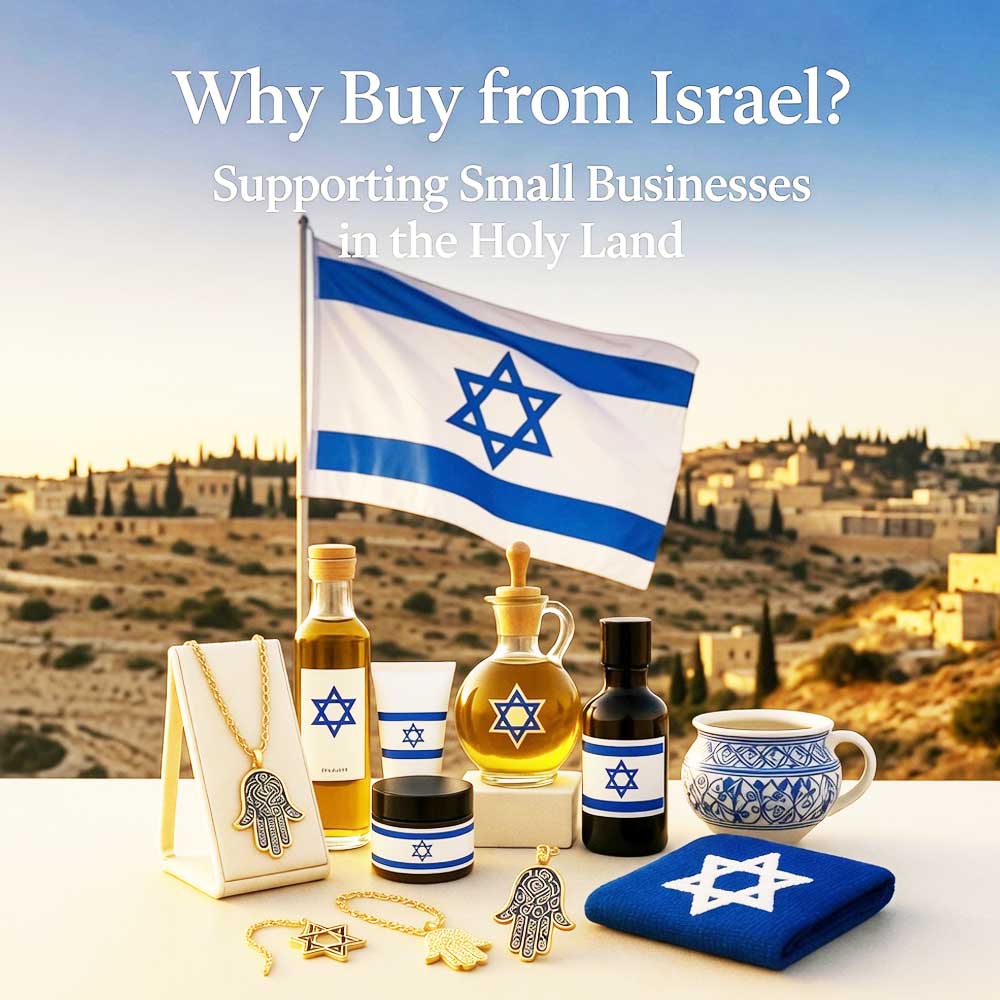
Walk through the markets of Jerusalem, Jaffa, or Tel Aviv today and you will see the Hamsa everywhere — in jewelry shop windows, hanging above doorways, painted on walls, and woven into the fabric of daily life. In Israel, the Hamsa is more than a symbol. It is a living part of the culture, a bridge between ancient tradition and modern identity.
The Meaning of the Hamsa – What Does It Symbolize?
The Hamsa carries multiple layers of meaning, each adding depth to this remarkable symbol:
Protection: The most universal meaning of the Hamsa is protection from harm, evil, and misfortune. The open hand is a gesture of defense — "nothing bad shall pass." Many people wear Hamsa jewelry specifically as a protective talisman, believing it shields them from negative energy and the evil eye.
Blessing: In many traditions, the Hamsa is not only protective but actively brings good things — health, happiness, prosperity, and fertility. Giving a Hamsa as a gift is an act of wishing someone well in the deepest sense.
The Evil Eye: The eye that appears on many Hamsa designs is a direct reference to protection against the evil eye (Ayin Hara in Hebrew) — the harmful gaze of envy or malice. The belief in the evil eye is ancient and widespread, appearing in dozens of cultures worldwide. The Hamsa's eye is meant to reflect this gaze back to its source, protecting the wearer.
Faith and Connection: For Jewish wearers, the Hamsa is a connection to Jewish heritage, history, and the land of Israel. For Christians who love Israel and the Bible, it is a tangible link to the Holy Land and its ancient traditions. For anyone who wears it, it is a reminder that we are not alone.
|
Types of Hamsa Jewelry – Finding the Right One for You
At Israel Gifts, we offer a wide variety of Hamsa jewelry in sterling silver 925 and gold 14K. Here's how to choose the right piece:
Hamsa Necklaces and Pendants
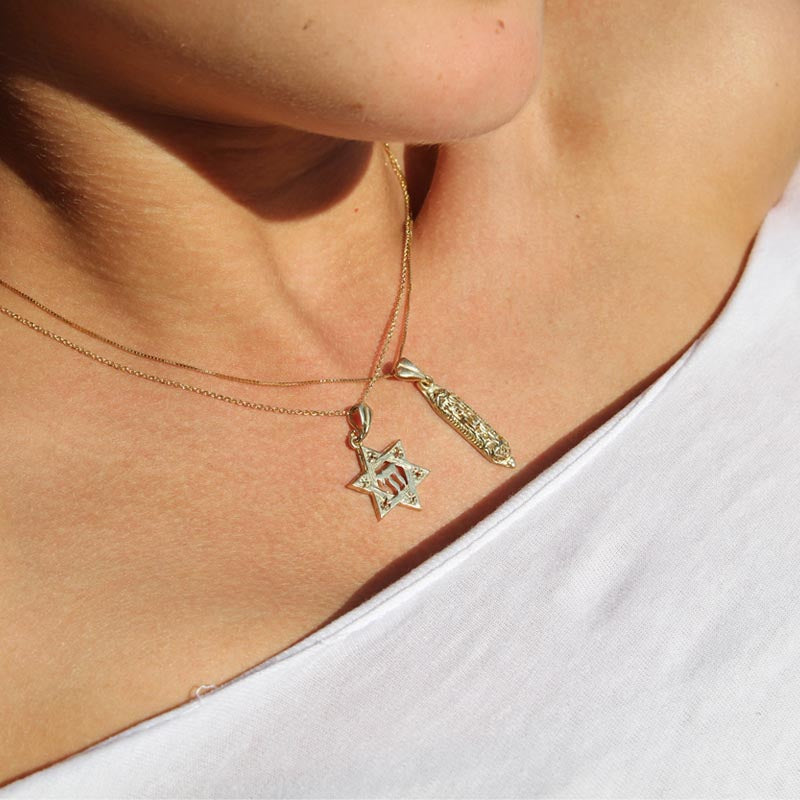
The most popular form of Hamsa jewelry is the pendant necklace — a Hamsa charm worn close to the heart on a silver or gold chain. Hamsa pendants come in many sizes and styles, from small and delicate to bold and statement-making. A sterling silver Hamsa necklace makes a beautiful, meaningful everyday piece. A gold 14K Hamsa pendant is a more precious gift for a special occasion.
Hamsa Bracelets
Hamsa charm bracelets and bangles are another popular choice, especially as gifts. A Hamsa bracelet worn on the wrist keeps the symbol of protection close and visible — a constant reminder of blessing and care.
Hamsa Earrings
For a subtle, elegant take on the symbol, Hamsa earrings in silver or gold are a versatile choice that works with almost any outfit and style.
Hamsa with Gemstones
Many of our most beautiful Hamsa pieces feature gemstones at their center — opal, turquoise, garnet, or the deep blue of the evil eye. These add color, energy, and an extra layer of meaning to an already powerful symbol.

Hamsa Jewelry as a Gift – Who Is It Perfect For?
One of the reasons Hamsa jewelry is such a beloved gift is that it works for almost everyone:
For someone going through a difficult time: A Hamsa is a gift of protection and strength — a way of saying "I'm thinking of you and I want good things for you."
For a new home or new beginning: Moving into a new home, starting a new job, beginning a new chapter — a Hamsa is the perfect companion for new beginnings.
For a Jewish friend or family member: The Hamsa is deeply rooted in Jewish tradition and is always a meaningful, appreciated gift.
For a Christian who loves Israel: The Hamsa connects the wearer to the ancient Holy Land and its traditions — a tangible piece of biblical history to wear every day.
For a bat mitzvah or graduation: A Hamsa pendant from Israel makes a deeply personal, memorable gift for life's milestone moments.
For yourself: Because you deserve protection, blessing, and a beautiful piece of the Holy Land to carry with you.
|
Sterling Silver vs. Gold – Which Hamsa Is Right for You?
Sterling Silver 925 Hamsa jewelry is the most popular choice — beautiful, durable, and accessible. Silver has a cool, elegant look that suits the Hamsa's clean lines perfectly. Our sterling silver 925 collection includes Hamsa pendants for every style and budget.
Gold 14K Hamsa jewelry is a more precious choice — warm, rich, and timeless. A gold Hamsa pendant is the kind of piece that gets passed down from mother to daughter, from grandmother to granddaughter. Browse our Judaica jewelry collection for our finest gold Hamsa pieces.
Authentic Hamsa Jewelry – Made in Israel
There is something uniquely meaningful about wearing a Hamsa that was actually made in the land where this symbol has been cherished for thousands of years. At Israel Gifts, every piece in our Hamsa jewelry collection is designed and crafted in Israel — by Israeli artists and silversmiths who understand this symbol not as a trend, but as a living part of their heritage.
When you wear one of our Hamsa pieces, you're not just wearing a beautiful piece of jewelry. You're wearing a piece of the Holy Land, a piece of history, and a symbol that has protected and blessed people for thousands of years.
→ Browse our full Hamsa jewelry collection

השארת תגובה
This site is protected by hCaptcha and the hCaptcha Privacy Policy and Terms of Service apply.